A century in the making: architects of a legend
Positioned for the future
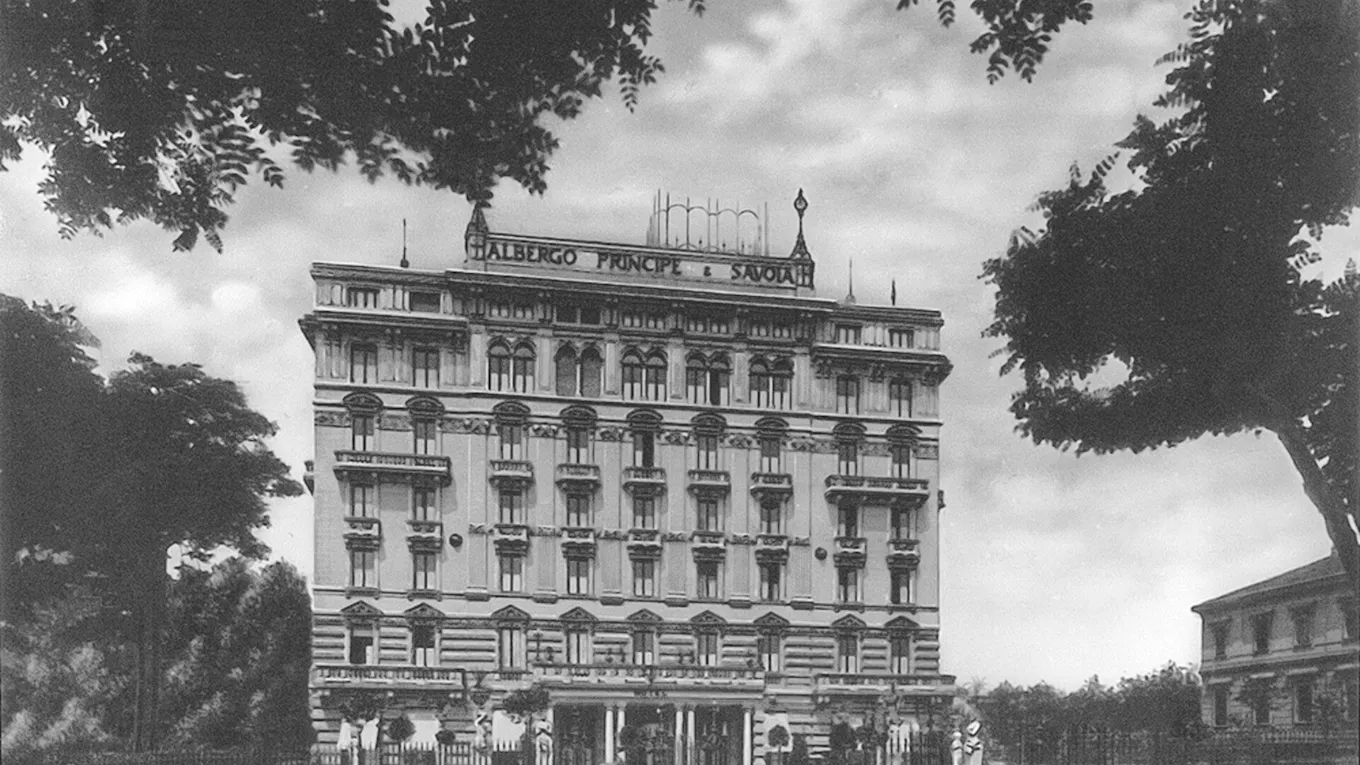
When the ‘Principe e Savoia’ – the name it went by at the time – opened its doors in 1927, Milan was on the rise. The city was fast becoming Italy's business capital: but for many in this generation, the only part of the city worth paying attention to was limited to the axis between Piazza del Duomo and Piazza della Scala. So the Principe's chosen address, a then-nondescript square called Piazza Fiume, raised more than a few eyebrows.
The architect behind that decision, Cesare Tenca, saw what others didn't. Piazza Fiume sat in an open, tree-lined space, moments from the newly built Stazione Centrale. The Principe would be a luxury hotel near Milan's central station, perfectly placed for business travellers arriving by rail, yet still less than ten minutes by carriage from La Scala, where the renowned Arturo Toscanini was conducting to sold-out houses.
It was a location built on logic as much as ambition. Close enough to the city's cultural heart, closer still to the industrial energy driving Milan's growth.
Nearly a century later, that same instinct – to design not just for beauty, but for the way people actually want to live – has guided every architect who's left their mark on the Principe.
Light and sparkle
Thierry Despont reimagined the hotel's Winter Garden Bar in 2009, transforming it into what we know today as the Principe Bar.
He described his intent in words that still echo in the space: light, sparkle, sensuous, radiant. He preserved the marble and wood panelling that gave the room its character, striking the assured balance between heritage and contemporary energy that made Principe Bar the heartbeat of Milan's social calendar.
At the heart of the bar sits a custom-made banquette that wraps dramatically around a grand piano. It’s framed by sculpted tinted crystal and a back-lit mirrored wall crowned by a hand-blown chandelier, crafted by master glassmakers in Venice.
Texture and tempo
On the corner of the main building, overlooking Piazza della Repubblica, Francesca Basu’s restoration of the eight Principe Suites drew inspiration from the drama and opulence of La Scala. Her design language paired rich, colourful fabrics with furniture that nods to the hotel's heritage, giving each suite a warmth that feels both modern and rooted.
Every surface a story
A few floors up, Celeste dell'Anna designed the four Imperial Suites, residences with sweeping views over the piazza and its gardens. Step inside, and you’ll be struck by their tactile details: a table topped with glistening crocodile leather, a canopied bed, warm leather detailing in the walk-in closet. The walls tell their own story, hung with paintings that reinterpret some of the 20th century's most celebrated masterpieces.
Presidential prestige
And then, at the very top of the building, there's the suite that crowns them all. The Presidential Suite was entrusted to American architect Michael Stelea, whose task was nothing less than to capture the essence of Hotel Principe di Savoia itself – its neoclassical façade, multicoloured marble floors and crystal chandeliers.
This set the tone for everything that follows. Stelea's design brings a dynamic flow of space and light to the suite, conceived to feel as commanding as the hotel it sits atop.
Five architects. Five distinct visions. A hotel that’s always evolving, while never losing sight of what it's always been. And in 2027, the story moves into its next transformational chapter…
Hotel Principe di Savoia closes for restoration on January 1, 2027, and will reopen in 2029. Book your stay to experience the hotel before it all begins.